

There is plenty to worry about in this new era of artificial intelligence.
The pace of change is extraordinary. Tools that barely existed a few years ago can now write essays, generate images, compose music, produce code, summarize research, solve problems, and retrieve enormous amounts of information almost instantly.
There are real questions here about misinformation, displacement, privacy, bias, intellectual property, environmental impact, and what happens when we outsource more and more of our thinking to machines.
We need to take that seriously.
And.
There is also something about this moment that feels deeply affirming.
If machines can do more, what becomes more human?
In a recent video about education in the age of AI, Dr. Marcus Fontoura makes a simple argument: if machines can increasingly handle memorization, information retrieval, routine procedures, and even many of the tasks we have historically used to measure academic success, then the purpose of education has to shift.
What becomes more important is our ability to become more fully human.
To be curious. To ask good questions. To decide what matters. To make meaning. To pursue work that is personally meaningful and genuinely interesting. To communicate clearly. To collaborate with other people, including people who think, live, communicate, or experience the world differently than we do. To try things we do not already know how to do. To fail, reconsider, adapt, and try again.
LightHouse was founded more than a decade ago on the premise that education should be about much more than accumulating information, earning grades, and demonstrating that you can follow instructions.
We did not know ChatGPT was coming. What we did know was that the world young people were entering would keep changing — that nobody could reliably predict which specific facts, technologies, jobs, or technical skills would matter twenty years later, and that preparing young people for that world couldn't mean simply filling them with as much information as possible.
So we built around something else.
We built around agency.
Around helping young people discover what interests them and why. Around giving them opportunities to make choices and then live with those choices. Around learning through projects, relationships, experimentation, reflection, and real work. Around developing the ability to communicate, collaborate, problem-solve, advocate, create, persist, and change course.
Knowledge still matters enormously.
You cannot ask particularly good questions about something you know nothing about. Creativity depends on having things to connect. Expertise still requires sustained study, practice, mentorship, and experience.
But knowledge is the foundation, not the finish line.
The goal is becoming someone who knows how to keep learning — not accumulating a fixed inventory of information that will somehow carry you through the next fifty years.
That means developing curiosity rather than extinguishing it.
It means having enough confidence to attempt something difficult and enough humility to realize when you are wrong.
It means learning from teachers, as well as mentors, peers, colleagues, craftspeople, artists, employers, community members, and experience itself. In the real world.
And increasingly, it means learning how to use extraordinarily powerful machines without allowing those machines to determine what is worth doing.
This has sometimes made LightHouse look unusual compared with traditional schools. In the age of AI, it looks increasingly practical.
The technology has changed dramatically.
The reason for the work has only become clearer.
What happens when the path you thought you were on disappears?
That was the question we brought to the Long Table on August 5. Around the table that evening were people from different generations, professions, and cultural backgrounds, gathered over dinner to talk about career pathways in the age of artificial intelligence.
We began not with predictions about the future of work, but with memory:
Think of a time when an unexpected change disrupted the path you thought you were on—but eventually opened a possibility you had not imagined. What helped you move from uncertainty toward curiosity or opportunity?
The stories that followed were personal and varied: jobs lost and paths altered, a literal earthquake, relationships ending, surprises in parenting, relocations, illness—plans that once felt certain becoming impossible.
Many of the stories followed a similar arc: an unwilling acceptance of something that initially felt like hardship, followed—sometimes years later—by gratitude for where it led.
Not gratitude for the pain itself, and not the easy insistence that everything happens for a reason. Something more grounded: the recognition that a life can widen after it has been disrupted.
One person spoke about writing as a form of healing. Another said simply:
"I like miracles."
There is a great deal of fear surrounding AI and the future of work, much of it justified. Jobs are changing. Some will disappear. Career paths that once seemed reliable are becoming less stable. Entry-level work, in particular, is already being transformed—and in some cases eliminated—as AI takes on many of the tasks through which people have traditionally learned a profession.
There is also frequent avoidance of the nuance—whether by declaring that AI will solve everything, pretending that nothing fundamental is changing, or deciding that refusing to engage with it at all is an adequate response.
Our conversation resisted those sweeping positions. Instead, it moved toward harder questions: What kinds of human capacities will matter most in a changing world? What is education actually for? How do we prepare young people not only to enter a workforce, but to think critically, exercise judgment, and find purpose in their work and lives?
As the evening unfolded, the conversation became less about predicting which jobs will survive and more about what kind of society we might choose to build amid significant technological change.
Someone asked: What would education focused on care look like? How do we teach care rather than competition?
That question pushed our conversation about career pathways in the age of AI into deeper territory: what assumptions are built into the way we prepare young people for work?
For generations, one of the dominant promises of education has been relatively straightforward: do well in school, go to college, earn a degree, and gain access to a stable career and a better life. For many young people, that path now includes substantial debt—and the employment outcome at the other end is increasingly uncertain.
Recent college graduates are already feeling that shift. As of mid-2026, their unemployment rate was about 5.6 percent—well above the rate for workers overall—while roughly four in ten were underemployed, working in jobs that typically do not require a college degree (New York Fed).
As the old bargain becomes less reliable, the question is bigger than how we make young people more competitive. What is the promise of education now? And beneath that are even more fundamental questions: what kind of future are we trying to build, and what will people need to know, understand, and be able to do to shape it?
Are we bound to economic structures that measure education primarily by its usefulness to the workforce? Must school exist mainly to produce workers who can meet the demands of the existing economy?
Or might education help people become creators rather than consumers—and participants in building something different?
AI gives these questions new urgency—and a new opportunity to answer them differently.
When memorization, formulaic writing, information retrieval, and many routine tasks can increasingly be handled by machines, some familiar educational practices begin to look less like preparation and more like habit. We have to ask more seriously what kinds of learning remain essential when reproducing information is no longer a scarce skill.
One theme that surfaced repeatedly was the value of making real things in the real world—work with consequence beyond a grade or classroom exercise.
If AI creates an opportunity to reconsider what we ask human beings to spend their time doing, perhaps this is part of the invitation: to expand, rather than narrow, our understanding of what counts as valuable work and valuable learning.
Can we teach people to use powerful new tools without training them to surrender their judgment to those tools?
That question exposes an uncomfortable contradiction. Much of traditional schooling has rewarded compliance, correct answers, and acceptance of information presented by authority. Discernment, questioning, weighing multiple perspectives, and examining how knowledge is produced have often been less central. We have not consistently taught learners to question authority—and now, suddenly, we are asking young people not to accept whatever an authoritative-seeming machine tells them at face value.
But that requires habits we have not yet cultivated deeply enough, and in many cases have actively discouraged.
There is something exciting in that challenge. AI is creating new problems, certainly. But it is also exposing existing weaknesses on a grand scale—and perhaps, if we choose to respond thoughtfully, creating new urgency and opportunity for meaningful change.
The personal stories from the beginning of the evening echoed that same possibility: disruption can unsettle what seemed certain, but it can also create space for something new.
That does not mean every disruption is a gift. It does mean uncertainty and possibility often arrive together.
The technology may be new, but the capacities we believe young people need most are not.
Collaboration. Agency. Care for our community. Self-care and wellness. Creativity. Critical thinking. Personal responsibility. The ability to communicate across difference. Conflict resolution. Imagination. Vision.
We value these competencies as much as we value traditionally academic ones. Demonstrating them is a graduation requirement at LightHouse, weighted equally alongside academic coursework.
These are not "soft skills." They are increasingly central to the future of work and the future of learning. And they are not developed through passive compliance.
We build this through relationship. Every student has a dedicated advisor, and together they develop a sense of vision—a map for the student's own life—rather than simply moving through a predetermined sequence of courses. Our students are known well. They are trusted with real responsibility. They work with others, make decisions, create things that matter beyond a grade, and learn to connect what they are doing now with the person they are becoming and the life they want to build.
We are not interested in training students to compete with machines at tasks machines can do faster. Nor is our goal simply to prepare young people for the future of work. Since 2015, LightHouse has been creating the space for young people to develop agency, imagination, and a sense of direction for their own lives—and to see themselves as people who can help shape what comes next rather than simply adapt to or accept what is handed to them.
AI makes that work feel more urgent, not because the answers are suddenly clear, but because so many old assumptions are becoming less reliable. This moment asks us to think more carefully about what we value, what we are willing to let go of, and what kind of future we want to build together. What once sounded idealistic is turning out to be the most practical preparation for what comes next.
We'll keep setting the table. Come pull up a chair.
Two years ago this week, LightWorks Collective took ownership of 92–114 Race Street in downtown Holyoke.
We thought we had acquired a building.
Looking back, I think what we really acquired was room to imagine.
As our physical space has expanded, so has our sense of what is possible. It turns out that vision grows to fill the space it's given.
In just two years we've reopened the former Gateway City Arts venues as De la Luz Soundstage and De la Luz Divine Theater, hosted more than 200 public events, launched a fresh lunch program alongside a culinary workforce training program, created the De la Luz Technical Arts Institute to hire and train young people working in professional live events, built a bike shop with a woodshop and ceramics studio close behind, opened an intimate vinyl listening room, launched Creators Campus, and gathered around the first Long Table for a new series of community conversations.
Most importantly, we've continued supporting more than 100 young people each year in choosing a new way to school. This spring we celebrated another graduating class heading in every direction imaginable—including UMass Amherst, UConn, the University of Vermont, Westfield State, Wheaton, Sarah Lawrence, Simmons, and Smith.
If anyone is still wondering whether a young person can choose a nontraditional path and go on to thrive at a highly selective four-year college, I hope we can finally put that question to rest.
We are incredibly proud of our young people—and deeply grateful to everyone who has helped make all of this possible.
And then, in the very same breath, my mind jumps to everything that hasn't happened yet.
We still need a new boiler. Expanded HVAC for the venues. New windows on the upper floors. (The basement and first floor are done!) Extending after-school programming is at the top of the list (coming this fall!). Growing food in a greenhouse on the roof—and creating a Montessori-inspired coworking space for parents and young children—are still in the dream stage.
Our 40,000-square-foot campus in Holyoke still has plenty of room for dreaming.
At LightWorks, we've often said our vision is to become a reflection of the world we want to see—a world where people learn with each other, from each other, and for each other.
Two years ago, that felt like an aspiration.
Today, I can begin to see it taking shape.
We are far from finished.
But we have most certainly begun.
We're living through a moment of extraordinary change. Artificial intelligence is reshaping education, work, and creativity faster than any of us can fully predict.
I don't think our task is simply to hold on.
I think it's to hold on to each other.
Our stake in the ground is clear. We intend to embrace AI—not uncritically, but thoughtfully—so that young people learn to use these powerful new tools wisely rather than be used by them.
At the very same time, we're doubling down on the human capacities that have been at the heart of our work all along: curiosity, communication across difference, collaboration, creativity, leadership, empathy, and critical thinking. These are not new priorities in response to AI and education. They are woven into our competency-based graduation requirements and have been the foundation of our work for more than a decade. AI hasn't changed what we believe young people need—it has made those capacities even more essential.
It is a remarkable time to be alive.
Because of your belief in this work, we were able to secure this extraordinary building. Now comes the even more exciting part: filling it with people, ideas, conversations, performances, learning, work, healing, growth, and community.
This is work that can only be done together.
Whether your passion is education, the arts, workforce development, civic conversation, or simply imagining what comes next, there is a place for you here.
Reach out.
We can't wait to build what comes next—with you.
On Wednesday, July 8 we gathered with 18 people for the first Long Table dinner. The topic was AI and Education. Big topic! You’ll be relieved to hear that we hammered out all the answers and solved everything 🙂 Just kidding. I don’t know what that would even mean.
We did not solve all the world’s problems, but for a few hours we created the kind of space that feels increasingly rare: real people in deep conversation about things that matter, sharing and listening with care and respect, open to disagreement, with no expectation that anyone would convince, enlist, or change the mind of anyone else.
The goal wasn’t consensus. It was curiosity. Over a delicious meal and drinks.
LightWorks isn't my home, but hosting the evening feels personal. It's the work my colleagues, our board, and I have spent more than a decade building. Inviting people to gather around our shared table felt a little like inviting people into my living room. There is always a bit of vulnerability in that- are these the right napkins?! Is the water cold enough?! Are they noticing that scratch in the paint?
There is also a great deal of joy in sharing a space we've spent years building for exactly this purpose: to gather, to connect, to learn from one another, and to imagine together what a better future might look like.
If I had to summarize our overall vision in one sentence, it would be this: create places where people learn with each other, from each other, and for each other.
The Long Table is an embodiment of this vision.
One of the things we’re most proud of at LightWorks is our commitment and ability to bring together diverse people. This was again true at this event. Around the table sat people from different professions, generations, nationalities, ethnicities, backgrounds, political viewpoints, and life experiences. The youngest person was 24. The oldest was 90. We had educators, parents, technologists, artists, and community members. Our local diversity—among our greatest strengths—was proudly present in the room.
And despite all those differences, there was remarkable convergence about what matters most.
The evening wasn't a panel or a lecture. Instead, we centered the conversation around two carefully chosen questions and used a two-minute sand timer as a talking piece.
The first question invited people to look inward:
Describe a time when learning felt truly alive.
Unsurprisingly, not a single person spoke about grades or assignments. Many talked about curiosity. About pursuing something because they cared about it.
They talked about the satisfaction of working through struggle. Many described learning as something that became meaningful in part because it was difficult.
Several people shared about someone who believed in them: a teacher, a coach, a mentor, a parent. Someone who helped them keep going when they might otherwise have given up.
A few people spoke about beauty, which seemed to really resonate with the group—the experience of being drawn toward something simply because it felt beautiful or meaningful enough to pursue.
Listening to those stories, the contrast with so much of our current conversation about AI was significant.
Much of the current public conversation about artificial intelligence is driven by fear. Some of that fear is manufactured by algorithms that reward outrage. Some of it is entirely justified. AI represents an extraordinary disruption.
But disruptions also create opportunities to ask better questions.
As machines become increasingly capable of memorization, compliance, information retrieval, and routine production, perhaps school no longer needs to organize itself around those abilities. Perhaps this disruption requires us to spend more time cultivating the capacities that make us human.
Our second conversation turned toward that future.
As AI changes what is easy to look up, generate, or outsource, what could education become if we used this moment well? What would you most want to see protected, strengthened, or reclaimed?
The answers echoed what had already emerged around the table: empathy, communication, collaboration, leadership, creativity, judgment, confidence, and the ability to imagine something that doesn't yet exist—and then bring it into being.
People spoke about their fears, but also the importance of AI fluency: helping young people understand these tools, think critically about them, use them wisely, and remain their authors rather than becoming their products.
One of my favorite moments came near the end of the evening when someone observed that meaningful social change has rarely begun with sweeping declarations. More often, it begins around tables like this one—in homes, cafés, community centers, and gathering places where ordinary people wrestle with difficult questions together.
The feedback we've received since the dinner has reinforced that feeling.
Again and again, people wrote about how refreshing it felt simply to have a thoughtful conversation with people they might not otherwise meet. They appreciated the diversity of perspectives. They appreciated the structure that gave everyone a voice. And many commented on how isolating our algorithm-shaped lives have become—and how different it feels to think together with actual human beings.
We don't need to agree about everything.
We do need places where we can practice curiosity and deepen our understanding through unfamiliar perspectives.
For one evening, the room became a small reflection of the world we hope to build: curious, generous, diverse, thoughtful, willing to consider difficult questions together. That feels like something worth building.
The Long Table continues every other Wednesday this summer before moving to a monthly gathering this fall. If you have a question you'd love to explore—or someone you think should be around the table—we would love to hear from you.
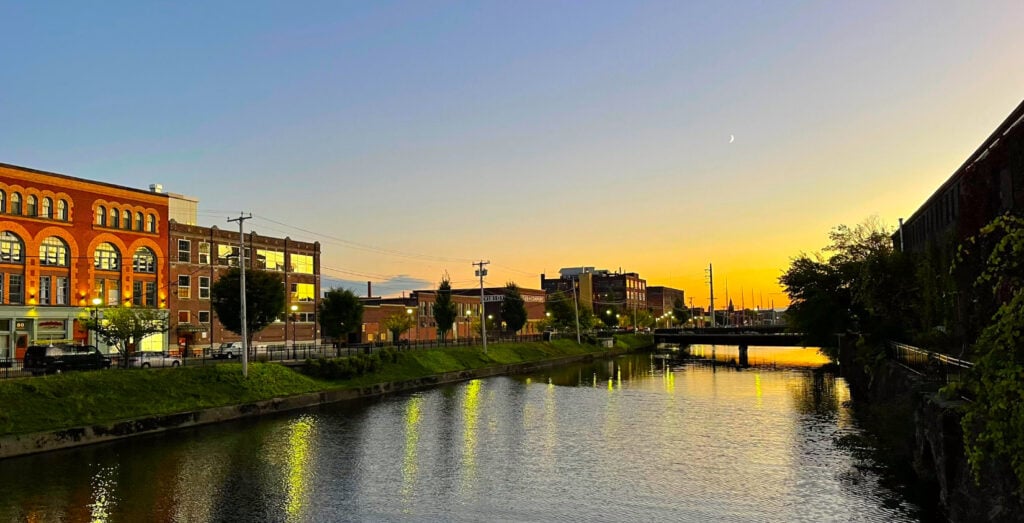
Summary:
This past year, our work expanded far beyond the bounds of what one school could hold. LightHouse Holyoke remains a flagship program, but our mission now includes arts access, creative workforce development, and multiple community-centered initiatives. LightWorks Collective is the new home for all of it—rooted in Holyoke, built on relationship, and shaped by a decade of growth.
In 2014, Josiah Litant and Catherine Gobron each put $500 into a bank account and started walking around Holyoke asking people what they needed from a learning center. LightHouse was born from those conversations—young people, families, educators, and neighbors telling us what wasn’t working and imagining something different with us. That first year, in a tiny space down the street, we built a program out of relationship, creativity, and a whole lot of trust.
Some of you reading this were among our Founding Friends and Angel Donors who helped us launch. Thank you, again, for believing in the potential impact of this work, and for investing in this dream.
Ten years later, we’re sitting inside a 40,000 sq. ft. facility with classrooms, performance venues, a commercial kitchen, and a maker space, having supported hundreds of young people to reshape their own lives. None of this was planned at the beginning. It grew because the community kept showing us where the gaps were—and we kept saying yes.
When we purchased and reopened this historic building, the former Gateway City Arts facility, we inherited more than square footage. Standing on the shoulders of what Lori Divine and Vitek Kruta built here, suddenly we had stages, kitchens, studios, workshops, gathering spaces, and yes… a liquor license registered under our wildly unhelpful original legal name “LightHouse Personalized Education for Teens.”
Our new facility creates new responsibility.
If we are a nonprofit committed to serving this community with every resource at our disposal, then what do we do when we suddenly have this many resources? How do we use a concert venue, a theater, a commercial kitchen, a maker space, and an entire arts campus in ways that open doors, build skills, strengthen identity, and bring people together? What does it look like to run a school and also steward a performing arts center and cultural hub for Holyoke and Hampden County?
We realized we needed a structure that could hold the full picture of our work—past, present, and emerging.
So in June of 2025 our Board of Directors voted to create LightWorks Collective, a new umbrella for everything we’ve grown into and everything we’re becoming.
LightWorks is now the home of multiple initiatives—including LightHouse Holyoke, which remains at the heart of our mission. But LightHouse is no longer the only program. Our commitment to this community has expanded, and our infrastructure has expanded with it. Our EIN is the same, but our overarching mission has grown. We've reopened the venues as De la Luz Soundstage and De la Luz Divine Theater, welcomed tenants and co-creators like Comfort Bagel and Arts Integration Studio, with more to come, shared our space with many of our nonprofit parters like Pa'lante Transformative Justice and Holyoke Food and Equity Collective, among many others, launched the De la Luz Technical Arts Institute, and we're focused on getting our 8,000 square foot community maker space up to code and publicly available asap.
LightHouse Holyoke continues to change what school can be, a mission that is more important than ever.
LightWorks Collective is expanding opportunity though education, access to the performing arts, and creative workforce development.
LightWorks allows us to name the truth. We are educators, yes. But we are now also cultural stewards, workforce builders, venue operators, community hosts, and creative collaborators.
We have tools in our hands—literally—and we intend to use them.
This name change doesn’t signal a departure from who we are. It puts language to the work we’ve already been doing and the future we’re stepping into together. Let us know if you'd like to get involved! We need board members, committee leaders, advisors, collaborators, teachers... Reach out!

This story starts in 2020, during COVID. I was in 8th grade. Growing up, I’ve always really liked school despite all the bullying I faced and the struggles at home, but a person can only endure so much before they reach their breaking point. 8th grade was when I reached mine. I went from being an honor roll student to skipping classes and not learning a single thing. I was so consumed by depression and anxiety that I felt suffocated. I understand that it was a tough time for everyone when COVID hit, and school became completely different, but I’d never done worse in my life in terms of grades. COVID was my excuse. I hid all the parts of me that I deemed weak behind my facemask. I was at an all-time low and I accepted it. I was okay because I couldn’t get any lower than I was at that moment. A constant feeling of everything and nothing all at once.
Then freshman year started. “I want to drop out of school,” I told my mother. My poor mother didn’t know what to do. Her child was sobbing every day, begging her to stay home. How could she say no? It had been months since school started, and I hadn’t gone a single day. My friends were amazed that I could go that long without receiving a letter from the school. “Lucky,” they called me. These people had no idea what that word meant. Social services had started to realize what was going on, and suddenly I was being summoned to court.
Here’s what I remember from that day: I was up for most of the night in excruciating pain and vomited a total of seven times. That was the last thing I did before I walked out the door. They had us sit in a room I’d encountered before with my social worker and two strangers in it. They told my mom that if I didn’t go to school every day without fail from that point forward, I would be removed from my household and put back into the care of my social worker. She was sobbing. I felt sorry for her, but other than that, I felt almost disassociated. I don’t remember the rest of that day.
The following week, I had to tour a new school. A school called LightHouse. The best part of it all was that there was absolutely no reason for me not to show up—the school was across the street from my house! How lovely. They would probably call me lucky. Now, I had never heard of this school before, and honestly, I wasn’t excited to start. I had been given an ultimatum, and there was no way in hell I would be able to pull this off. Or so I thought.
The school was small, but pretty. I had no intention of being there long, so I played along. I guess this school had advisors? That was new! Mine was very sweet. Her name was Lucy. If I had to drag myself out of bed to come here, at least I would be meeting with someone kind. She was almost too kind. In fact, she was the perfect advisor.
Day after day, I slowly started to realize something new. Something different. Now, don’t get me wrong, if I hadn’t been through such terrible things in my life already, this would have taken the number one spot. But I was starting to feel a bit of interest. I guess I’ve always liked writing. How come I never realized just how much I enjoyed it until I got here? My advisor started to guide me in my writing, and I thought, “Maybe a little longer wouldn’t hurt.” I kept writing and writing.
LightHouse was very supportive of me. I’d been used to being treated in a lot of ways. I knew when I was being brushed off, neglected, or taken advantage of, so this feeling was very odd. This place made the line of that ultimatum above my head blur, and suddenly the thought of dropping out no longer wandered in my thoughts. Shocked would be an understatement. This school was there to help me with whatever I needed, and I didn’t have to give up anything in return? The people here are unlike any I’ve ever met.
Through this school, I began to be able to feel again. This realization sparked something within me. Hope. There’s another way! It made me curious about how many amazing things I had yet to discover that were right in front of my eyes. LightHouse offers many things that you wouldn’t be able to find in a lot of places. I often felt left behind because of my situation before, but no such thing as “behind” existed at LightHouse. My pace may differ from others, and that’s okay. We are all human, and we learn in different ways and at different paces. This is the premise of LightHouse—an alternative way to a system that doesn’t help everyone.
I truly couldn’t express to you what going to this school has done for me. So once again, I begin to write. I never thought I would be here writing this. If you had asked me in 8th grade where I thought I’d be now, I probably would’ve told you I’d be doing absolutely nothing and rotting in bed. But I can proudly say that I’ve rekindled my relationship with my confidence in my academic ability.
I’m a senior in high school applying to college. COLLEGE. I’ve been doing all kinds of things, and I’ve honestly never been more motivated in my life. I went from declaring that I was going to drop out to applying for college. That’s what LightHouse has done for me. I couldn’t be more grateful. It seems the stars have aligned, and now it's my turn to claim the luck I once only heard of.

THANK YOU for your support, care, and encouragement through this wild 2024. This has been one of the most challenging and exciting years of my entire life.
On a personal level: Upheaval! Loss. Joy and New Developments. My daughter got married! We said goodbye to Apple, my beloved dog and LightHouse mascot. Big things ended. Big things began. Everything all at once.
On a professional level: Every bit as challenging and exhilarating.
Through a steady stream of community supported miracles, we raised $1.5M and borrowed another $2.5M (gulp) through a collaboration between Greenfield Northampton Cooperative Bank and Mass Development, and purchased and partially renovated the 40,000 sq ft. former Gateway City Arts complex at 92 Race St. in Holyoke. In a whirlwind collaboration between Houle Builders and HAI Architects, made beautiful by Sarah Reid at Small Victories Interior Design, we closed on July 18 (appropriately on the birthday of LightHouse CoFounder Josiah Litant), did a million things, and reopened in our new permanent home on September 3.
Like many of you who also love LightHouse, I have spent my life outside of the lines. Perhaps you also share that this was not on purpose. I'm somehow not the right shape for normal. I was never very good at doing things "right." This was a real problem as a young person. As an adult, it turns out to be a gift.
This personal sharing is relevant so you can see why I'm driven to work 10 million hours to create this space where young people who want and need something different can safely discover who they are and what they are capable of, and where creative adults can gather to try to make the world a better place.
Normal isn't really a thing, and so much of the pain we experience and inflict on each other is because we do not accept that in ourselves, which makes us struggle to accept it in others. As a result we co-create a culture of hierarchy and violence and unsustainable consumerism, which is great for capitalism, but very bad for our human psyches and for the other creatures sharing this planet with us.
Likely you know and understand this already, but perhaps, also like me, you sometimes lament that the problems are too big and too complicated.
All we can do is what we can do, each with our own particular gifts and pieces of an impossibly grand puzzle. LightHouse is a place where there is no one right way to be, where young people can discover and develop whatever their particular gifts are. We don’t know in advance, and we can’t figure it out for them. It’s a process of self discovery; a collaborative, supported process that includes feedback, encouragement, suggestions, and access to opportunities.
LightHouse is creating new possibilities for the young people we serve, and more than that, we are demonstrating that other possibilities are possible. I am sending these words on the last day of a very wild and exciting 2024 because I'd like to invite you to double down on your support and involvement with LightHouse for 2025. There's lots to do yet, and it only works as a together.
One-third of our annual budget comes through philanthropy, and now we’re in the midst of a capital campaign, too. We are deeply grateful for all the work the former owners of our new campus, Lori Divine and Vitek Kruta, put in to bring it to where it is, and much remains for our use as a school and community center.
We’re developing new real-world vocational programs using the facility’s two professional performance venues, De la Luz Soundstage and De la Luz Divine, as well as a culinary track in our new commercial kitchen and cafe. The basement level will become an 8,000 sq ft community maker space with your help. (Among the painful surprises of 2024 was the sudden loss of our esteemed Logan McFadden who was in the process of developing this collaborative maker space vision. We look forward to creating a tribute to them in this visionary space-to-be.)
In addition to financial contributions we welcome engagement of all kinds to help build these visions into a full reality. We have space on our Board of Directors and on committees and advisory groups. We need ideas and guidance and volunteers. Much is happening and it is SO exciting.
It’s a mess out here in the world, and it can be hard to get along. Sometimes it’s hard to get up at all. As you know, life in the world is also beautiful, inspiring, and worth showing up for. I’m inviting you to show up for LightHouse. Our cast of characters at LightHouse are often hilarious, and will also break your heart a little or a lot from time to time. Real life. Real hope. Come visit.
LightHouse Holyoke has found its forever home. We've acquired a three-building, 40,000 square foot campus in the heart of downtown Holyoke at 92 Race Street, just down the block from our previous space. This acquisition represents a monumental leap forward in our mission to change what school can be.
Our new facility, the former Gateway City Arts, is an incredible treasure on Race St., a powerful asset, and a cornerstone of the growing arts and culture district in Holyoke.
Our new home allows us to introduce several exciting new vocational tracks, a wealth of new programming, and double our enrollment over the next two years. We're launching a Production Academy where students will learn event production and stagecraft, a new theater program, setting up a community maker space to share this resource with the larger community, and developing a cafe management program to give our students hands-on experience in the culinary world. Looking ahead, we're also planning to introduce vocational programs in carpentry, metalwork, and tailoring.
The three-building campus is impressive in both size and potential. The main building spans three floors and a basement, with each level covering about 8,000 square feet. We now have a concert venue that can hold 500 people, a dedicated theater space, a cafe, various art studios, and a huge maker space. In addition to continued facility upgrades, the next phase build out includes a fine arts studio, science lab, recording studio, and media lab.
Gateway City Arts was founded and developed by Lori Divine and Vitek Kruta. We could not be more honored to take up the mantle and continue their work of developing a thriving arts and education community in downtown Holyoke.
Some things will change: Our school will be located in the main building. We’re engaged in a TURBO renovation project at present, led by Houle Construction, designed and engineered by HAI Architecture and made LightHouse beautiful by Small Victories Interior Design.
Some things will expand: There is an 8,000 sq ft maker space on the basement level that we aim to support as a community maker space. In addition to reopening as a live venue (more below), The Divine Theater will also host our new in-house theater program led by Isaac Eddy (formerly of The Blue Man Group.)
Some things will be reborn: Both venues are about to relaunch. In collaboration with Laudable Productions the large venue is being recreated as a performing arts center: De la Luz Soundstage. Laudable will also manage the Divine Theater: De la Luz Divine. Both venues will host a range of performances including nationally and internationally touring artists, building on the foundation laid by GCA. The cafe will also reopen as a public facing cafe (staffed in part by LightHouse students) as well as serve as an incubator and pop up opportunity for local chefs to offer a range of fare paired with events in both venues.
We’re excited to reopen the venues, and even more excited to use the venues as a real-world training ground for youth enrolled in our new Production Academy. Behind the scenes every event will be collaboratively produced by cohorts of young people working alongside professional adults in all aspects of event creation. Two vocational tracks will work together to engage both LightHouse students and interns (alumni and local youth aged 16-24); Production Academy: Producers and Production Academy: Stagecraft. Highly transferrable skills developed through these opportunities will serve young people as they move forward into any field. Youth who would like to move into careers in the entertainment industry will gain marketable skills and connections to nearby opportunities.
While GCA has been a well known entity, its relationship to LightHouse is less widely known.
Lori Divine and Vitek Kruta bought the former Judd’s Paper Company in 2012, and launched a 12-year journey that achieved more than would seem possible in just over a decade and through a global pandemic.
After creating a small restaurant (Tiny Kitchen), a theater, a woodshop, and art studios in the main building, Lori and Vitek bought the former garage next door and transformed it into a 500-person capacity concert hall, and began bringing nationally touring acts to Holyoke for the first time since The Victory Theater closed in 1979.
With the skills and vision of beloved local contractor, Terrence Bernhard, the team then built the cafe connector building between the main building and the garage-turned-venue, creating a three building arts complex with a huge, commercial kitchen and accompanying cafe. Our friends at Fame, another treasure just across the canal, got their Holyoke start there as The Famous Cafe. Over the years friends far and wide have enjoyed the beer garden, lunches, brunches, and untold numbers of concerts, performances, and events in the two venues, and eventually, delicious Czech cuisine in Judd’s, the third restaurant built onsite.
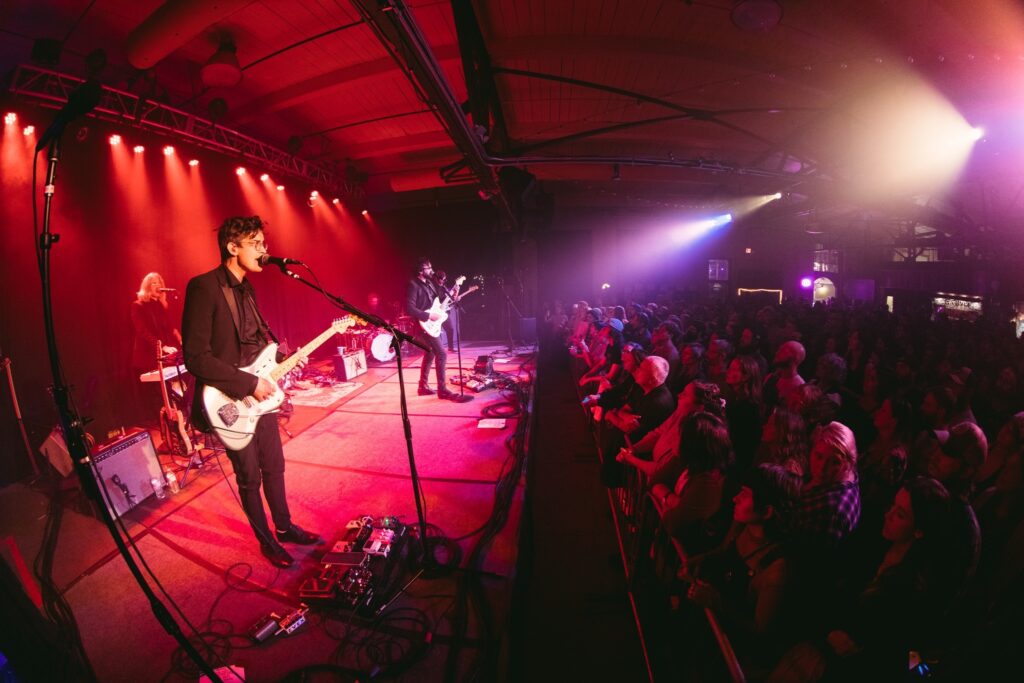
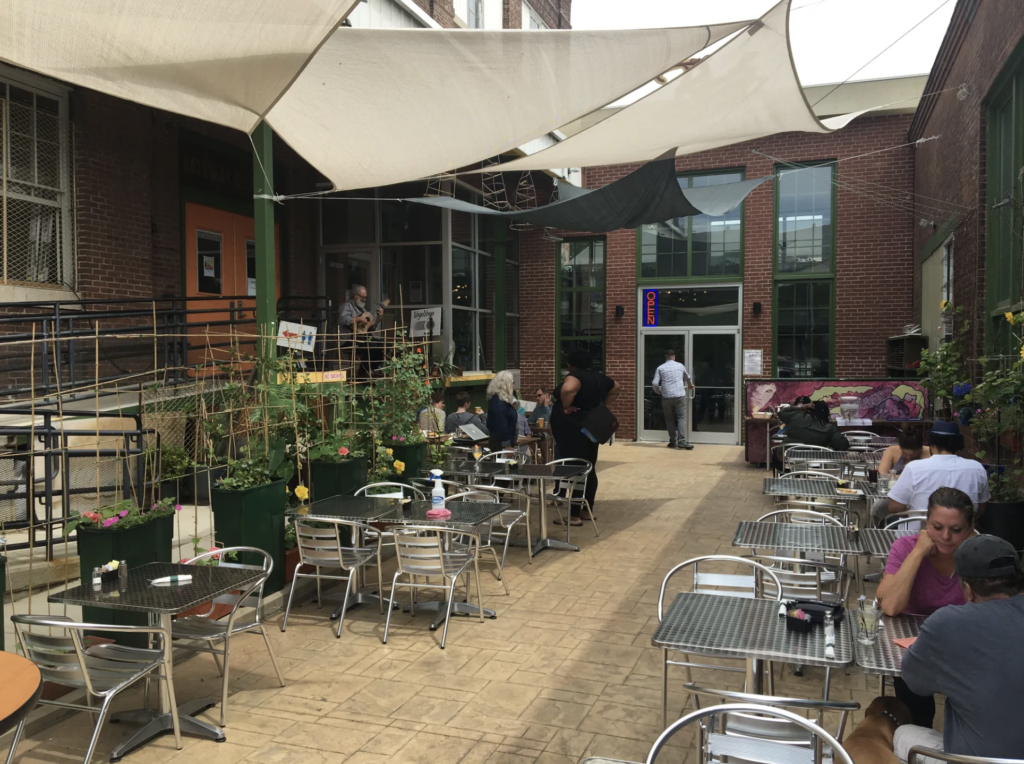
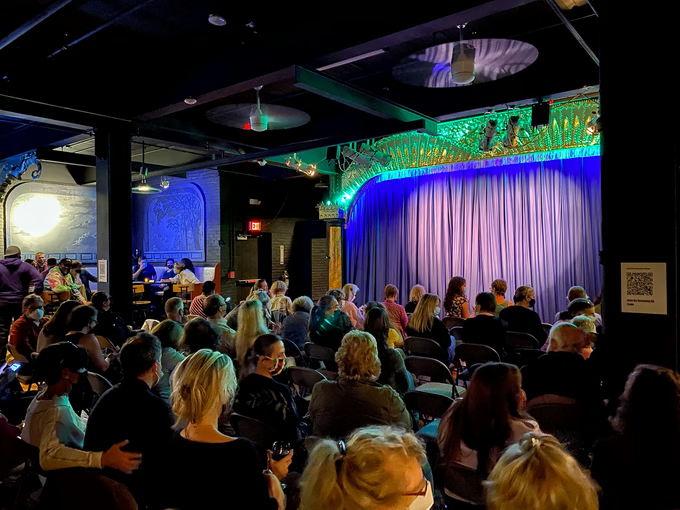
In the midst of expanding the GCA property, their team also acquired the STEAM Building, just down the block at 208 Race. When LightHouse was still mostly an idea in the heads of Josiah Litant and Catherine Gobron, Lori took a chance on us and we moved in as the first tenants at 208.
With the support of our angel donor, Gaye Hill, Josiah and Catherine signed the lease on behalf of LightHouse Holyoke, our freshly incorporated nonprofit. In a mad dash very similar to the one we’re in now, Terrance and his team completed the entire build out in a few short months and LightHouse opened in September, 2015.
That first day of school for LightHouse in September, 2015 we had lunch at The Tiny Kitchen in GCA with our new cohort of 19 intrepid students. When it was time for our first graduation in 2017, we held it in the GCA space that later became Judd’s Czech Restaurant. (Photos below!)
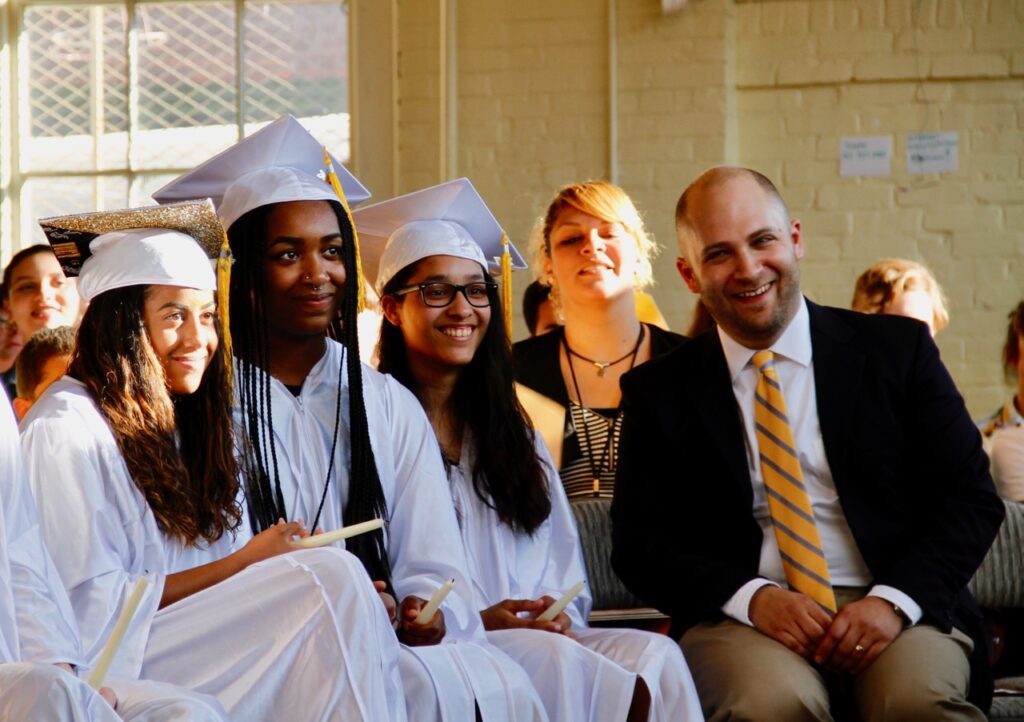
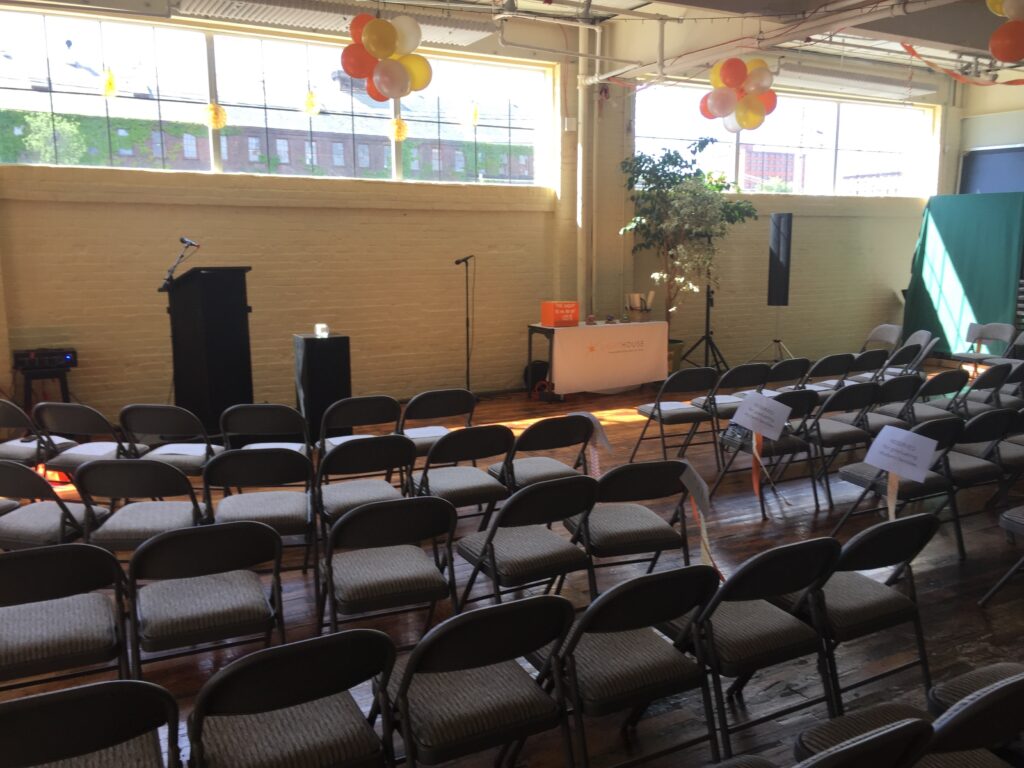
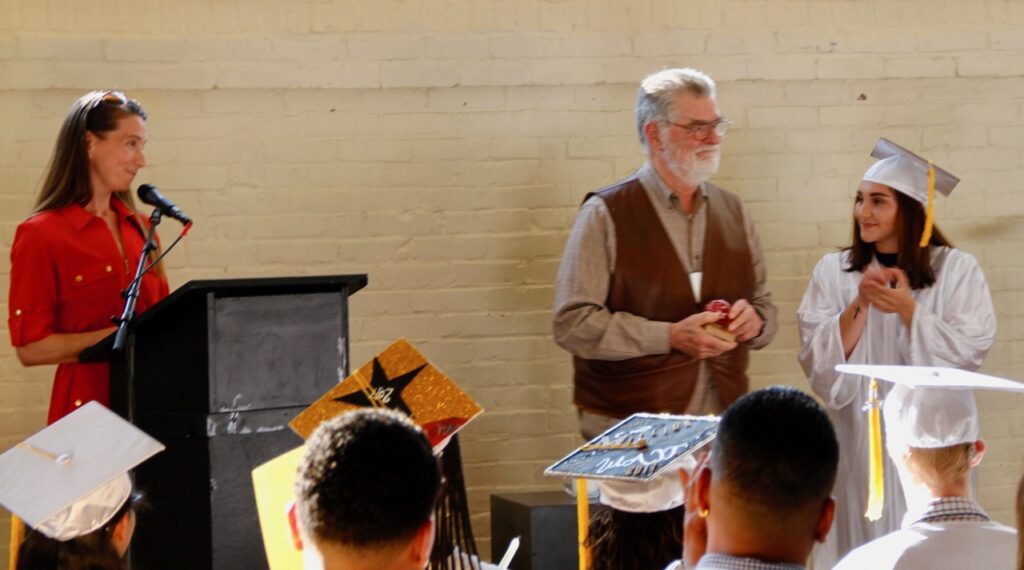
Over the years GCA has hosted many events for us... it’s been a decade of connection.
Thanks to an amazing set of visionary donors who together generated $1.5M, and the support of Greenfield Northampton Cooperative Bank with a bond through Mass Development to cover the rest of the purchase and renovations, we closed on July 18, 2024 (which is also Josiah’s birthday!) Perfect and meant to be in every way.
We are in a full on flurry of renovation activity before opening in the new space in just a couple weeks. We’d love for you to come in for a tour!
Many thanks, again, to Lori and Vitek for all of your work in Holyoke. LightHouse is eager to continue your vision. We consider ourselves stewards of this jewel you have created. We are deeply honored to open the doors wide and share this incredible resource with the Holyoke community and beyond.
Anyone who has experienced a moment of delight with another person as they grasp a new skill or concept knows what learning looks and feels like.
Their delight in that moment of insight is our delight, and all the more if we had some kind of helping hand in it. It’s a little spark of joy that illuminates both learner and witness for a moment.
Those moments of spark are not an all-day feeling. The vast majority of our time is spent in the challenge, the figuring-out, whether it's how to get to the next level in the video game, or the toddler figuring out how to click their own carseat, or how to make your glider fly straight. Mostly, we're a little bit frustrated. That's also what learning looks like, ideally peppered with enough sparks to keep our enthusiasm up.
The role of the adults at LightHouse is to create the conditions where exploration and discovery feel possible, and to support each young person to define and structure appropriately frustrating challenges that will result in just the right number of motivating sparks.
The whole thing is more like gardening than what we typically think of as "teaching." Plants want to grow. It's their nature. You don't have to make them. What you have to do, as a gardener, is to create the right conditions for growth to happen; enough wind and weather to develop inner strength, but not so much that the shoots are flattened. The analogy goes on. Enough light and water, but not too much...
The plant knows what it is and what it can produce- it's coded into the seed. The idea of a watermelon or a sunflower or a ginko tree is both unfathomable and somewhat preposterous when holding an unknown seed. The only thing that we can know, and must believe, is that each seed has it's own blueprint and innate potential to express its unique beauty.
We believe that not only does this potential exist, but that the entire world benefits from its expression as a vital contribution to our infinitely vast ecosystem. The expression is a benefit to the individual plant (or child), to be sure, but it's also an essential benefit to our interconnected human community in ways that we can neither predict nor fully understand.
We believe that the goal of a learning space, commonly known as "school," is to create the conditions where growth and flowering are supported.
On the mission page of our website, toward the bottom you'll find a section called We Believe. One of the statements is: "As adults working with young people, we should mostly strive to “make possible” rather than “make sure.”
Thanks for joining us in this work of making possible.
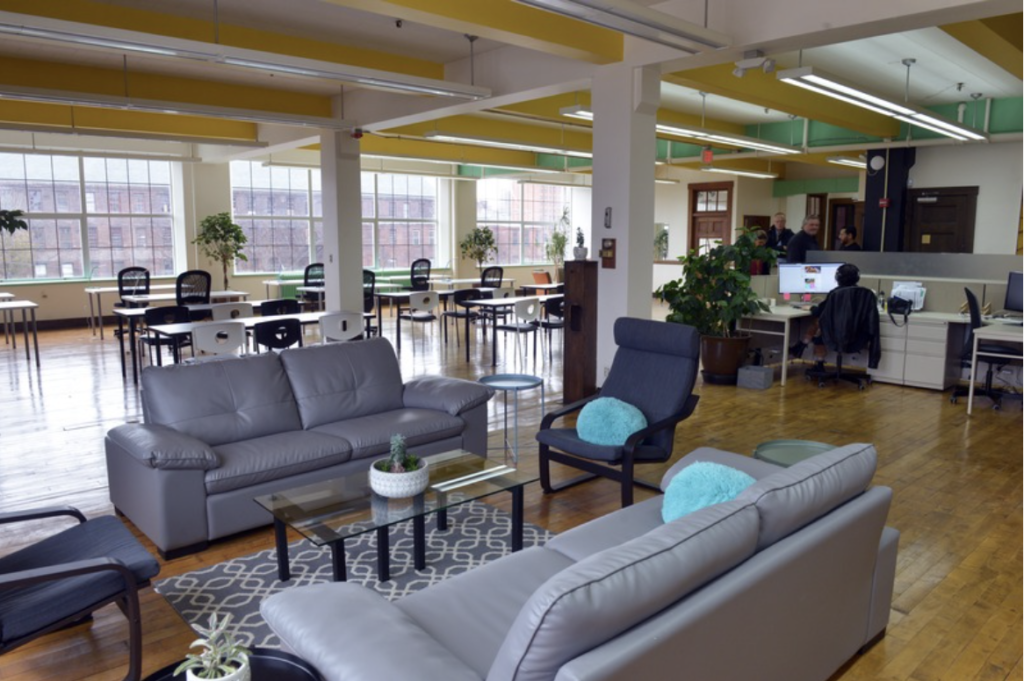
The media has been abuzz about it!
Here's a link to an article and photos on masslive.com
We've got big plans:
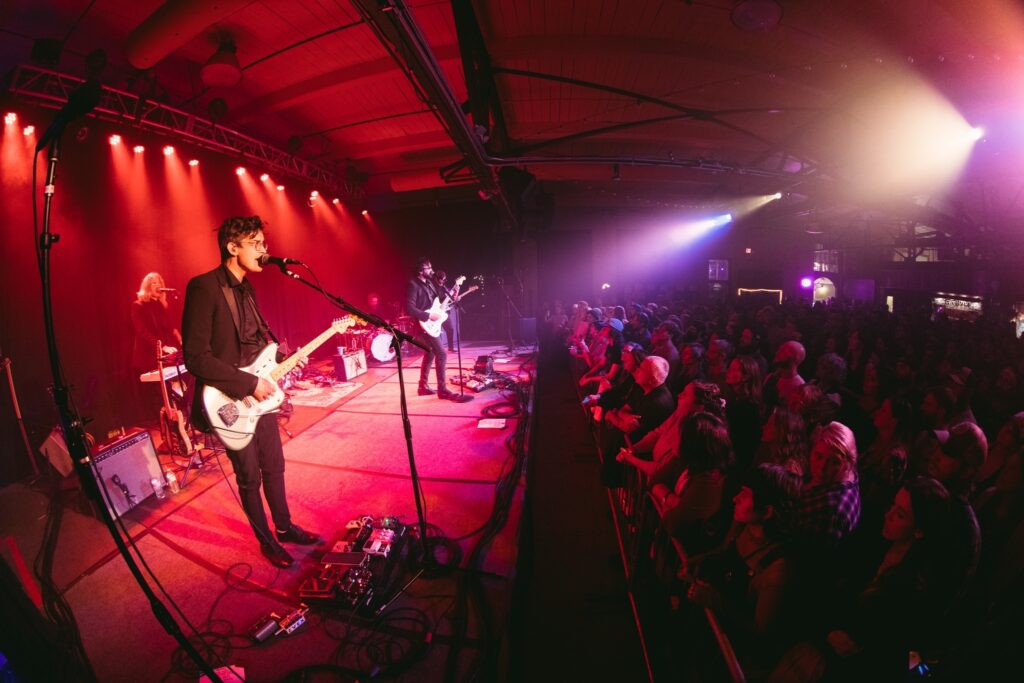
LightHouse is partnering with Laudable Productions to reopen the former Gateway venues at 92 Race and develop an integrated "Production Academy" a vocational program for the entertainment industry. Through hands-on, real-world engagement, interested students will learn all of the skills involved in hosting shows and festivals, from artist management to sound and lighting, in the context of a live venue.
Interested youth and families should reach out to David Lane for information on how to get involved.